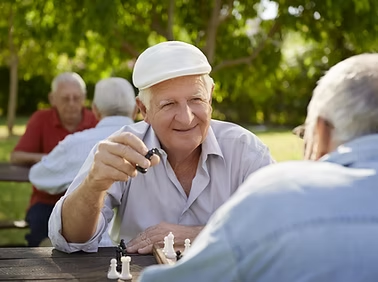
Getting older comes with one clear benefit: you're less insecure about yourself. You're more likely to say what you're thinking and do what you want than when you were younger.
Tip 2 Everybody ages. It's inevitable.
Do you know anyone who looks and acts the same, decade after decade? From birth onward, life is changing, and that's a natural thing. Resistance is futile. Being in denial about aging is guaranteed to make you miserable. Creatively adapting to changes as they occur will allow you to do what matters most to you.
Tip 3 Some changes ARE due to "normal" aging.
Needing glasses or hearing aids, or having trouble remembering proper nouns is to be expected as you age. These changes don’t occur in the same order or to the same degree in everyone. What's "normal" doesn't mean that you will like these changes, nor does it mean that there’s nothing you can do about them.
Tip 4 Some changes are NOT due to "normal" aging.
Learn a lesson from my patient, Harry, who went to see the orthopedist because of pain in his left knee. When the doctor said, "What do you expect? You're 90 years old!" Harry replied, "My right knee is ALSO 90 years old, and it feels fine."
Tip 5 Get a doctor who knows the difference between caring for 80-year-olds versus 50-year-olds.
Regardless of how well you’re doing, there are physiologic changes that occur with age. Heart attacks can present as shortness of breath without any chest pain, certain medications should be avoided, and the benefits and risks of screening tests and procedures may differ from those for younger people.
Tip 6 Brain health is heart health.
There has been a 25 percent decline in dementia over the last decade, which accompanied a significant decrease in heart attacks and strokes. Controlling your blood pressure, cholesterol, and blood glucose, optimizing your diet and physical activity, stop smoking, and losing weight can all decrease your chances of developing heart disease, a stroke, or dementia.
Tip 7 Hydrate, hydrate, hydrate!
Older people run "dry." Changes in the ability to feel thirst and the kidney’s ability to concentrate urine and preserve salt puts older people at high risk for dehydration, lightheadedness, heat stroke, and confusion. But don't hydrate with alcoholic or caffeinated beverages, you'll just urinate more!
Tip 8 Dose matters.
You'll become a cheaper drunk. With alcohol and many medications, you get more "bang for the buck," meaning that you will have a greater response to previously well-tolerated amounts. Medications taken at the same dose for years may begin to cause problems because of age- and disease-related changes in the way the body processes and responds to them. Your brain also becomes more sensitive to medications, affecting your memory and ability to pay attention.
Tip 9 Right-size your expectations.
Learn what to expect with aging. For example, everyone walks more slowly and loses some strength. Exercising will make you faster and stronger, but it won’t get you back to where you were at 30. All of the runners in the Boston Marathon are in top shape, but 59- to 75-year-old men finish about 1½ hours later than the 18- to 39-year-olds.
Tip 10 Remember to S.O.C.
When you find you can't do everything you want to do, SELECT what matters to you, OPTIMIZE by practicing and rehearsing what you are able to do (use it or lose it), and COMPENSATE by embracing alternative methods and equipment.
AGING MYTHBUSTERS
You still need 7–8 hours of sleep everyday.
It just may be harder to get! With aging, it can take you a little longer to fall asleep and your level of sleep may be lighter. Medical and/or psychological conditions may wake you up at night, after which it can be harder to fall back to sleep.
Bed rest is good...for dead people.
Though there are a few exceptions, bed rest is not good for you. The less you move and the more you stay in bed, the more deconditioned and dehydrated your body will become. This is especially true if you’re in the hospital. Loss of muscle strength happens quickly, while rebuilding it can take a long time.
You still need to worry about safe sex.
Sexually transmitted diseases, including HIV, are becoming more common in the older population. Chlamydia infections among Americans aged 65 and over increased by 31 percent, and syphilis by 52 percent between 2007 and 2011. Attention to safe sex, which includes the use of condoms, remains vital as you age, especially in non-monagamous relationships. You are never too old to be at risk.
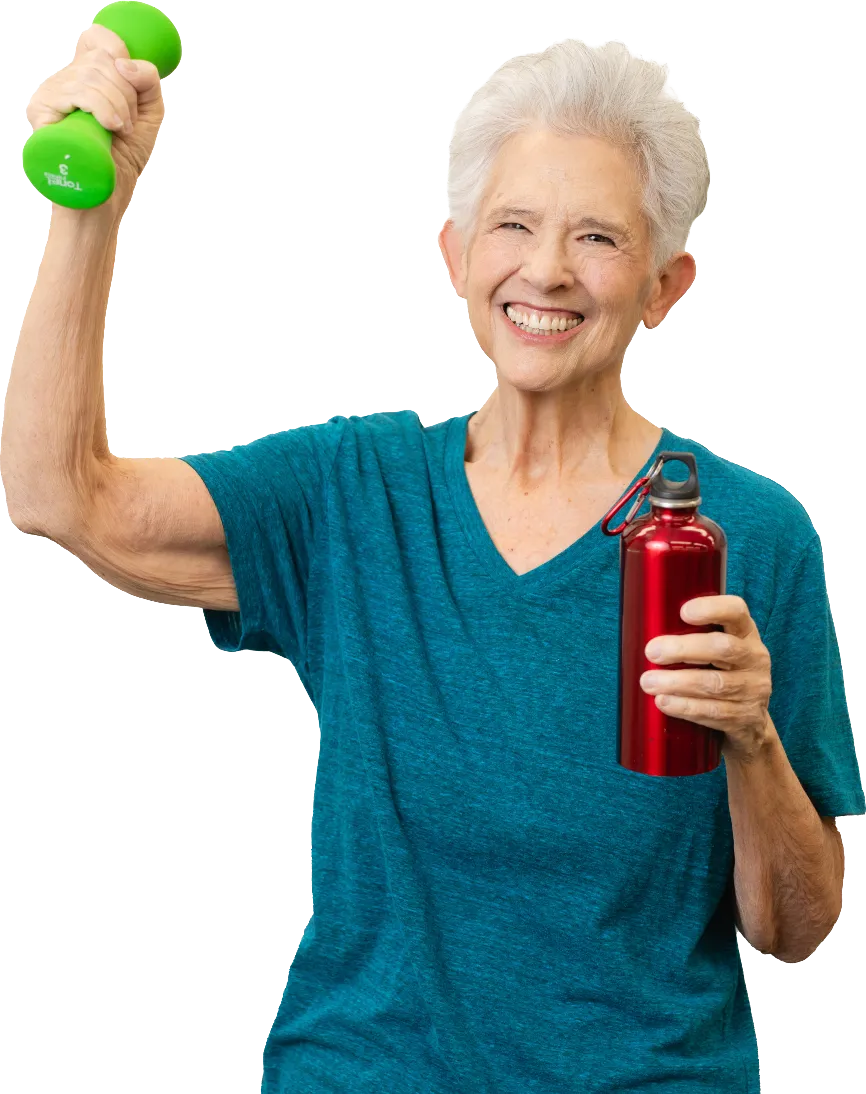
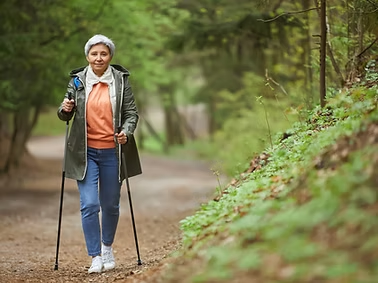
There IS a magic bullet. It's called exercise!
It’s never too late to start exercising. Physical activity helps cognition, strength, endurance, and much more. Even 90-year-olds can benefit from resistance training.
No pain, no gain no longer applies.
You don’t need to feel pain to build strength. Studies show there's a similar gain in muscle strength and size, with fewer injuries, when you use a weight that is tolerable (not the heaviest you can lift) and raise it repeatedly until your muscles feel tired. Once this gets easier, increase the weight or the number of repetitions.
You CAN make new friends.
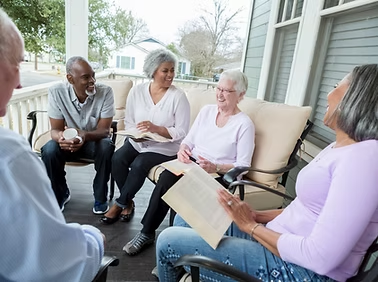
Getting older doesn't mean you should isolate yourself. Frequent participation in meaningful activities and relationships decreases loneliness and increases life satisfaction. Do things you enjoy and try to make some new friends.
Newer isn't necessarily better.
Newly approved medications can cause unanticipated problems in older people because there are usually few older people in the trials that show the drug’s effectiveness. This is particularly true for those who are frail or have multiple medical conditions. New medications are also often more expensive than those that are time-proven. If your medical provider or an advertisement suggests you try a new medication, ask why it’s better than the tried and true.
Some unprotected sun exposure is beneficial.
Yes, sun causes skin cancer. But sun exposure can improve your mood, sleep quality, and bone density by increasing vitamin D levels. Don't go out at the height of the day's sun, and if you’re going to be in direct sunlight for longer than 15 minutes, put on sunscreen and wear sunglasses.
Question authority.
When your medical providers suggest tests or treatments, make sure they’ve considered your life expectancy, functional abilities, and preferences. Ask if the dosage and medication are right for someone your age. Be part of the discussion. Remember: Nothing about me without me!
Naming your health care proxy is necessary, but not enough.
You may think that you’ve done your duty to you identify someone who will make medical decisions for you should you become incapacitated. But you’re asking your proxy to act FOR you, to do what they think YOU would want done in a given situation. It’s a real burden if they have no idea what your wishes are. So have the conversation. There are websites that can help you think this through, including: www.prepareforyourcare.com.
EXERCISES
01 Stretch yourself.
Decrease pain and increase mobility.
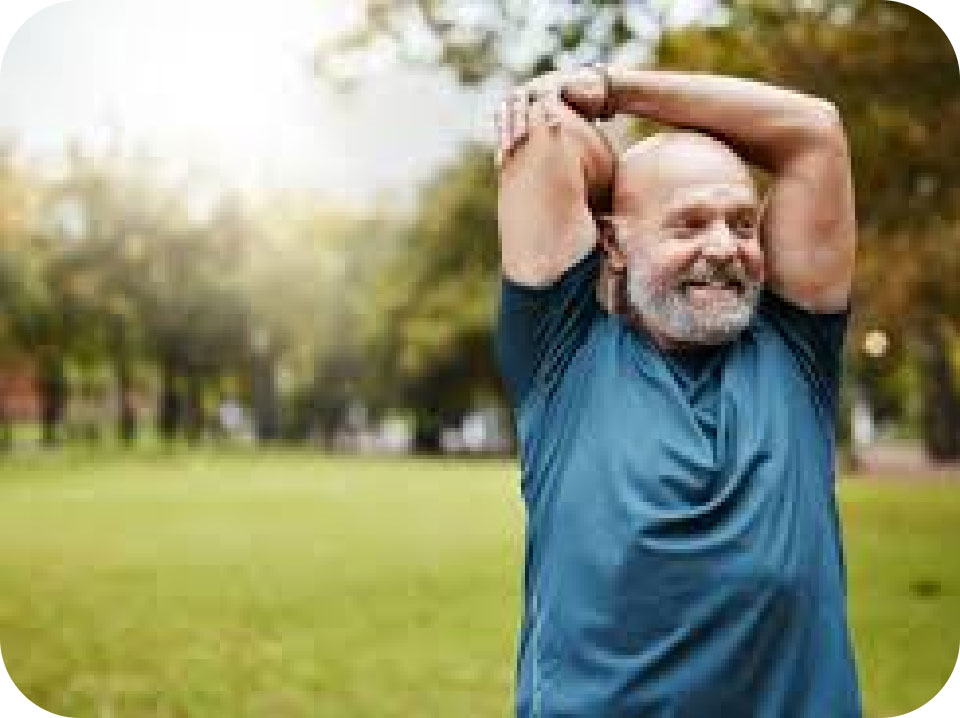
Stand with your legs shoulder-width apart, extend your arms upward, and clasp your hands. Bend from the hip to the right as far as possible without pain or discomfort, then return to an upright position before bending to the left. Hold each bend for 5–10 seconds, and repeat 8–10 times on each side, 2–3 sets. For variety, place one hand on your hip, the other up in the air.
02 Breathe deep.
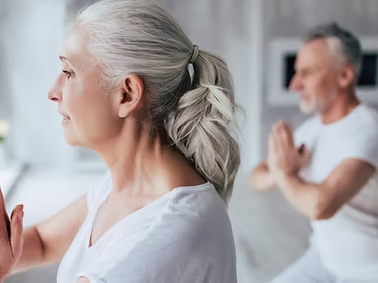
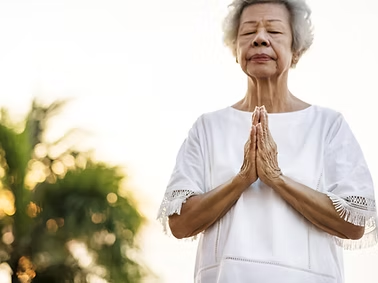
Slow down, live consciously. Focus your attention on your breath, either as it enters your nostrils or as it expands your abdomen. Inhale and exhale. You can be sitting or even lying down, as long as you're comfortable. Keep your eyes closed, or focus on a particular object. You may find it easier to maintain your focus if you close your eyes. Begin with 5 minutes a day, and slowly increase to 15–20 once or twice a day. You may also want to do this for a minute or two when you feel stressed out or overwhelmed.
03 Stay balanced.
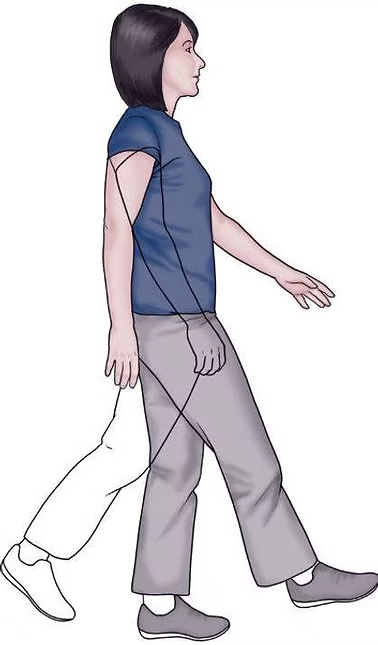
Decrease your risk of falls. Single Leg "Walking"
Stand on your left leg. Move your right leg out in front of you in a walking motion as your left arm swings forward; then move your right leg behind you as your right arm swings forward. Repeat these movements for 20–30 seconds. Then do the same while standing on the right leg for 20–30 seconds, making sure to reverse the arm movements (move the left leg in front of you as the right arm swings forward; move the left leg back as the left arm moves forward).
04 Save your shoulder.
Rotator cuff tears are common in older adults.
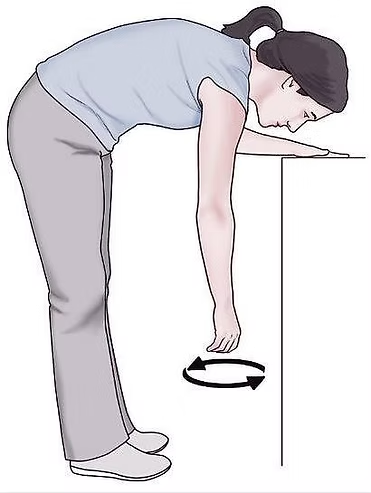
A. Arm Rotation
Bend at the waist, while holding on to a table or chair for support, and let your arm dangle down. Gently rotate your shoulder so you’re drawing circles in the air with your arm — start with small circles and work up to bigger ones.
B. Build Shoulder Strength
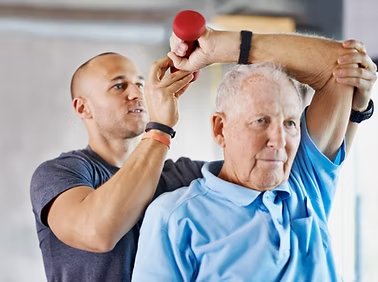
1. Holding a lightweight (2-lb) dumbbell, lie on your stomach on a bed or table. Stretch out your arm so your elbow bends at the edge of the bed and the hand holding the dumbbell hangs down.
2. Slowly raise your hand, stopping when it’s level with your shoulder, then lower it slowly. Repeat until your arm is tired, then switch sides. As your muscles strengthen, progress to using heavier dumbbells.
05 Relax your neck.
Release tension in your neck and shoulders.
Walk head first, not chin first. Keep your shoulders as far away from your ears as possible, and check on where they are several times a day. Stretch your neck by tilting your head toward your shoulder (keeping your shoulders down). You can also do a diagonal neck stretch by turning your head 30 or 45 degrees, and tilting it toward your chest. For an added stretch, use your hand to gently pull your head toward your shoulder. Hold each stretch for 15–30 seconds and repeat 2–4 times.
06 Strengthen your core.
Tighten your midsection and lower back.
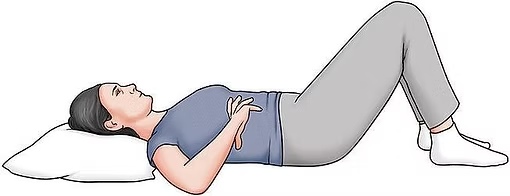
Lie on your back with your knees bent, feet on the floor, and your neck supported with a pillow or rolled towel. Place one hand on each side of your ribs, and inhale, feeling your ribs extend outward laterally into your hands. Then exhale, bringing your belly button toward your spine. Repeat 5–10 times.
07 Strengthen your upper back.
Improve your posture.
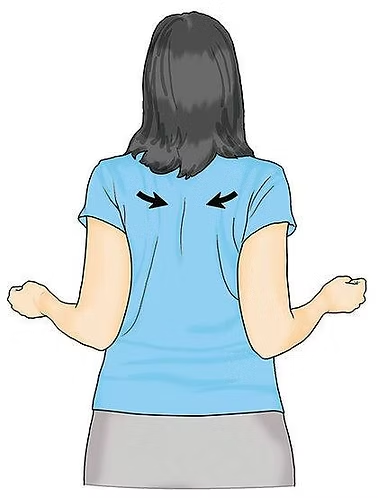
Stand with your elbows bent at 90 degrees. Pinch your shoulder blades together as you rotate your arms outward. Keep your shoulders down. Hold the position for 3–5 seconds. Do 10 repetitions, two to three times every other day. When the exercise becomes easier because your back muscles are getting stronger, add a resistance band. Grip one end of the band in each hand as you do the exercise to increase the challenge.
08
Stop your leaks.
Incontinence can be controlled.
Kegel Exercises
Stop leakage from both stress and urge incontinence by strengthening pelvic floor muscles. First, identify the correct muscles, those which stop urination midstream, keep you from passing gas, or, in men, make the penis move up and down independent of the rest of the body. Next, tighten these muscles without tightening your stomach, legs, or buttocks, or holding your breath. Slowly pull up your pelvic muscles, lifting towards your belly button, and squeeze for a count of 3, then relax the muscles the same amount of time. Work up to a set of 10 contractions, each lasting 6–8 seconds, and do them three times a day, 3–4 times a week. Remember: Take as much time relaxing the muscles as you spend contracting them. In 2–4 weeks you’ll notice some improvement, and by 3–4 months you should be able to rely on them to decrease leakage.
09 Strengthen your legs.
Get up from a chair more easily.
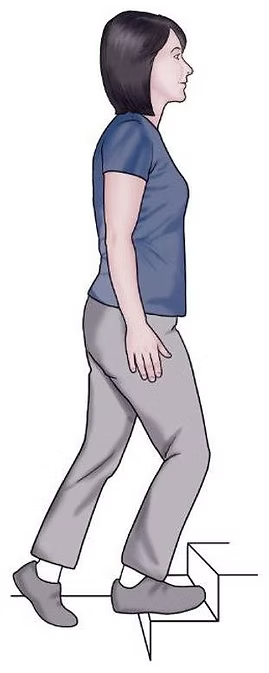
Stand at the bottom of a staircase or other sturdy step, keeping your feet flat and toes facing forward. Step up onto the step with your right foot, straighten your right leg, and then place your left foot next to your right. Then step down with your right foot, followed by your left foot. Repeat 10 times starting with your right foot stepping up and down first, then 10 times with your left foot stepping up and down. Do three sets for each foot (if you’re unsteady on your feet, hold onto a banister or hand rail).
10 Train your brain.
Use it or lose it is real.
There are changes in memory and cognition that occur with normal aging. It takes more repetition and practice to learn something new, including where you parked your car or put your keys. It’s harder to recall words and names that you haven’t used recently. Some things that can help are to really pay attention and rehearse what you want to remember and do crossword puzzles or other word games that force you to think about words you don’t commonly use. Practice strategies like writing things down, visualizing what you want to remember, or connecting it to something familiar and possibly meaningful. For example, to memorize a name you might say: “Your name is Sara? That’s my aunt’s name!” Or, “Do you spell Sarah with an h?"